BLOG ARTICLE
Faceless Finance Channels: Complete Guide 2026

Faceless finance channels combine one of YouTube’s highest-paying niches with a format that doesn’t require you to be on camera. Viewers searching for budgeting tips, investing basics, or market updates care about clarity and credibility, not who’s speaking. Banks, investment platforms, and fintech advertisers pay premium CPMs because their customers have high lifetime value, so finance content often earns several times more per view than entertainment or gaming. This guide covers why the finance niche pays, content ideas and formats, real channel examples, how to create finance videos without showing your face, monetization, and compliance so you can start and grow a faceless finance channel in 2026.
TL;DR
- Finance is the highest-paying YouTube niche. Average RPM for finance content runs about $10–$25 per thousand views, with credit card and investment sub-niches at the top. That’s several times more than gaming or entertainment per view.
- Faceless works well for finance. Viewers want clear explanations and data, not a face. Whiteboard animations, explainers, and screen-based tutorials fit budgeting, investing basics, and market updates without you appearing on camera.
- Content ideas that perform: Evergreen topics (budgeting, index investing, retirement), credit card comparisons, case study breakdowns, and list-style videos. Target tier-1 audiences (US, UK, Canada, Australia) for the best CPM.
- Monetization beyond ads: Affiliate programs (budgeting apps, brokers, courses), sponsorships from fintech brands, and digital products. Finance channels often earn a large share of revenue from affiliate and sponsored content, not just AdSense.
- Compliance matters. Disclose sponsorships and affiliate links clearly. A “not financial advice” disclaimer does not replace disclosing paid partnerships. Keep content advertiser-friendly to protect monetization.
Why the Finance Niche Pays More
Finance content attracts advertisers with strong budgets. Credit card issuers, brokers, banks, and fintech startups value viewers who are actively thinking about money. A single referred customer can be worth hundreds or thousands of dollars over time, so these advertisers bid more for ad space on finance videos. As a result, finance niche RPM typically sits in the $10–$25 range (with top performers higher), while gaming or broad entertainment often earns $2–$6 RPM. Geography matters: content that reaches viewers in the US, UK, Canada, and Australia earns more per view than content aimed at lower-CPM regions. If you’re choosing or refining your niche, finance is among the strongest options for ad revenue and for sponsorships and affiliate deals.
Sub-niches within finance
Not all finance topics pay the same. Credit card reviews and comparisons often sit at the top (roughly $15–$25 RPM), followed by personal finance and budgeting, stock market and investing, and tax or retirement planning. Cryptocurrency and “make money online” can still earn well but often a bit lower than traditional finance. Picking a sub-niche you can sustain (e.g. “investing basics for beginners” or “credit card rewards”) helps you rank for specific searches and attract the right advertisers without competing with every generic finance channel.
Content Ideas and Formats That Work
Finance audiences search for answers: how to budget, how to start investing, which credit card to choose, how to save for retirement. Evergreen topics stay relevant year-round and keep attracting views long after upload. That fits faceless production: you can batch scripts, use AI voiceover or whiteboard tools, and publish consistently without being on camera.
Strong content angles for faceless finance channels:
- Basics and education: Budgeting for beginners, how index funds work, what is a 401(k), how to build an emergency fund. Clear, step-by-step explainers suit whiteboard or stock footage plus voiceover.
- Comparisons and lists: Best budgeting apps, top credit cards for travel, how different brokerages compare. List-style and comparison videos often attract strong search traffic and align well with affiliate programs.
- Case studies and scenarios: “How I would invest $10K,” breakdowns of real portfolios (anonymized), or “monthly budget for a family of four.” Scenario-based content drives engagement and can be produced entirely with visuals and voiceover.
- Updates and trends: Market recaps, inflation explained, or “what the Fed decision means for savers.” Keep a neutral, educational tone and cite sources so the content stays advertiser-friendly and avoids sensationalism.
Videos of 8 minutes or longer allow mid-roll ads and tend to earn more per view than short clips. Use chapters and a clear structure so viewers stay longer; that helps both revenue and the algorithm.
Successful Faceless Finance Channels: Real Examples
These channels show how finance content can work without a face on camera. They use different formats (whiteboard, animated explainers, ideas-focused narration) and have built large audiences and revenue.
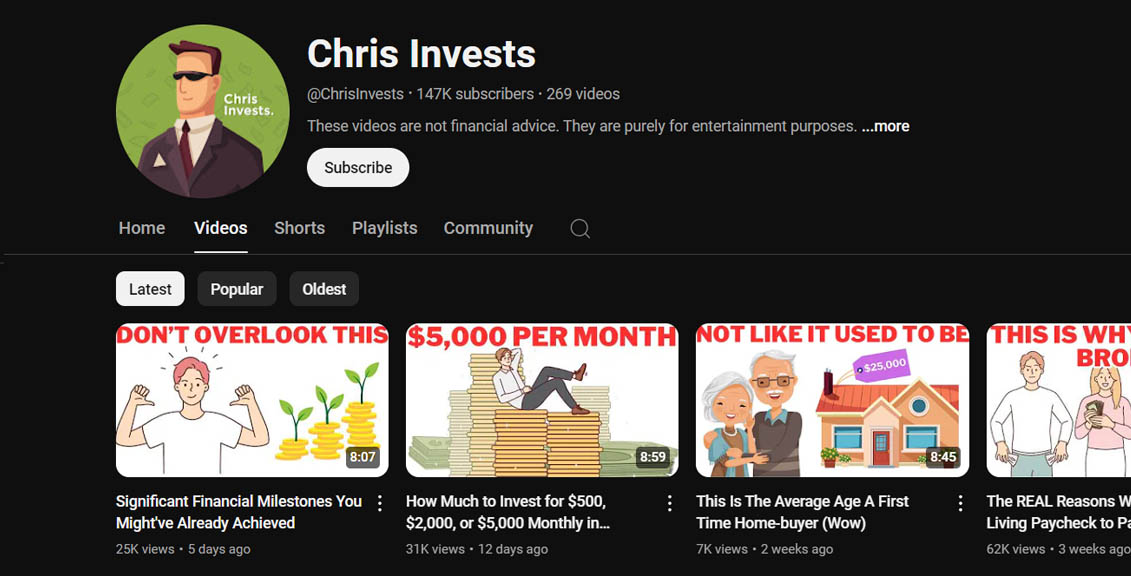
Chris Invest explains investment and money concepts with whiteboard-style animations. The format is simple: drawings and text appear in sync with the voiceover, so complex ideas become easy to follow. The channel focuses on evergreen topics like how to invest, side income, and building wealth, which keep attracting views and suit both ad revenue and affiliate marketing (e.g. brokerage or course links). Channels in this style often see estimated earnings in the $5,000–$6,000 per month range from ads and sponsorships at similar scale.
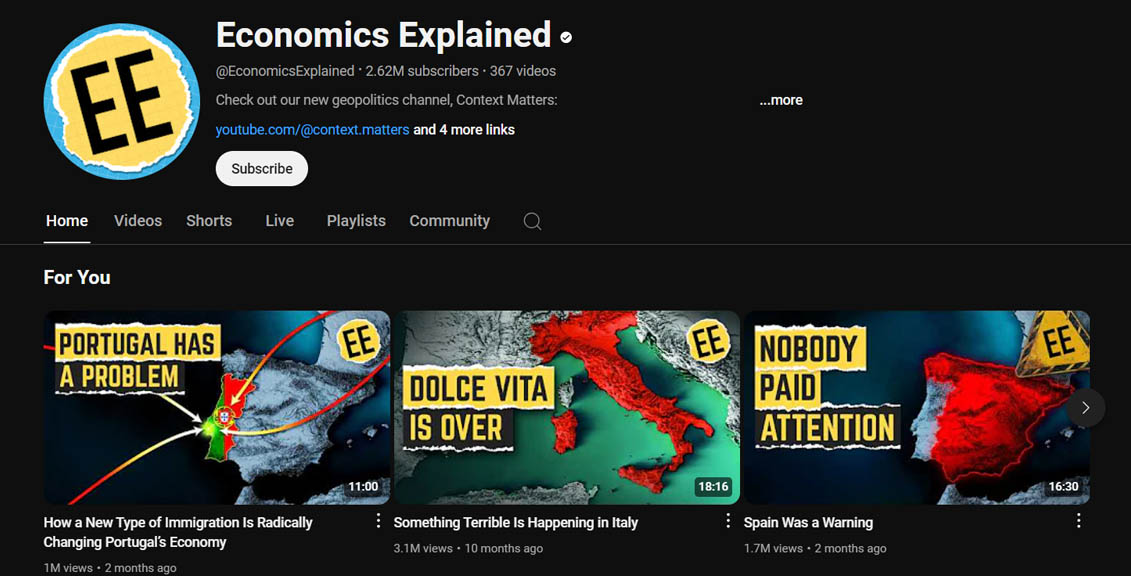
Economics Explained breaks down economic concepts (GDP, inflation, trade) with animated explainers and a clear narrator. With over 2.3 million subscribers, it shows that faceless education can scale in finance-adjacent topics. The content is evergreen and appeals to viewers in tier-1 countries, which supports high CPMs and sponsor interest.
Practical Wisdom blends finance with ideas and self-improvement. The channel uses narration over visuals and text to simplify financial strategies and “interesting ideas” without a host on screen. This format works for budgeting, saving, and mindset topics and fits both ad monetization and affiliate or course promotions.
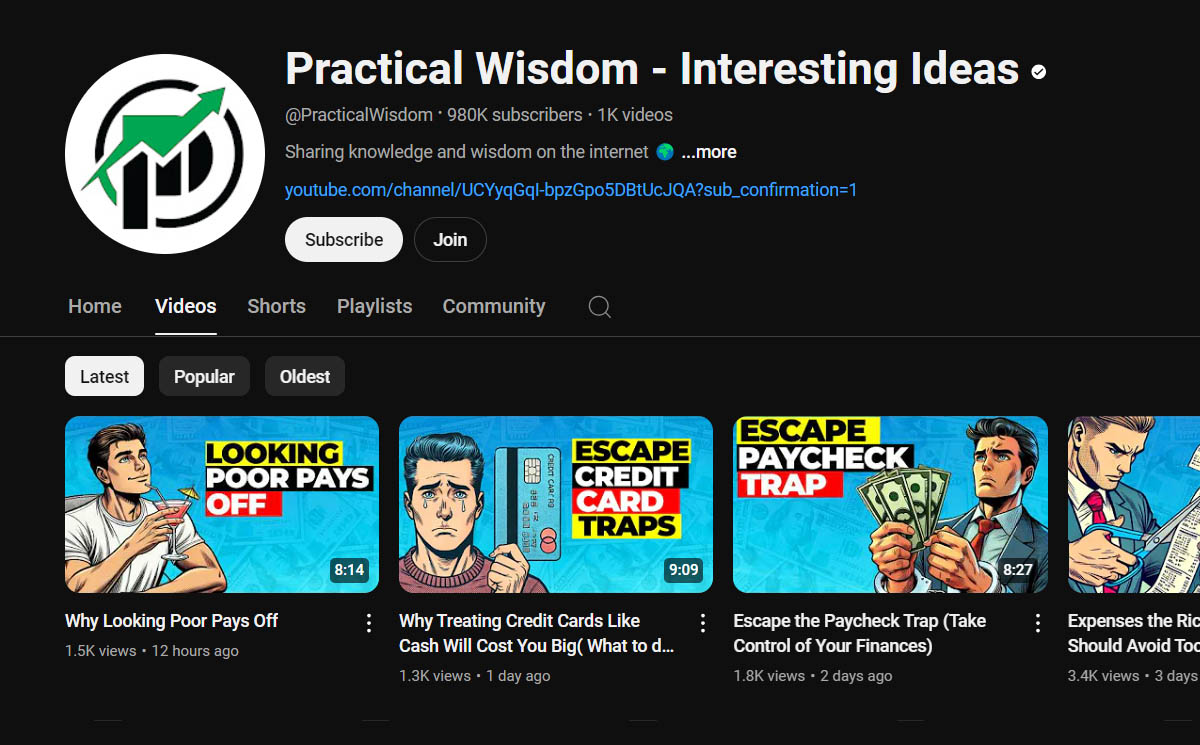
What these channels share: a clear niche, consistent format, and focus on value and clarity rather than personality. You can adopt a similar approach whether you use whiteboard software, AI-generated voice and visuals, or stock footage with a script.
How to Create Finance Videos Without Showing Your Face
You don’t need a camera or a studio. Finance faceless videos can be made with a few core elements: a solid script, a voice (your own or AI voiceover), and visuals that support the message.
Whiteboard and animated explainers: Tools like VideoScribe or similar apps let you create “drawing” style videos where concepts appear step by step. This format works well for “how investing works,” “how to budget,” or “what is compound interest.” Script first, then match visuals to each beat so the narrative is clear.
Stock footage plus voiceover: Pair a script with relevant clips from Pexels, Pixabay, or paid libraries (e.g. Storyblocks). Use charts, cityscapes, or lifestyle shots that match the topic (e.g. saving, shopping, screens). Edit in Clipchamp, CapCut, or another editor; add a clear, calm voiceover so the tone fits finance.
AI-assisted production: Tools that turn scripts into videos (e.g. selecting footage and generating voice) can speed up output for explainers, list videos, or market updates. Use them for first drafts, then adjust visuals and pacing so the result doesn’t feel generic. Consistency in style and tone matters more than fancy effects.
Screen recording: For “how to use this app” or “how I track my budget,” screen recording plus voiceover is enough. Keep the screen clean and the steps simple so viewers can follow along. This format pairs well with affiliate links to the tools you show.
If you’re new to faceless video production, start with one format (e.g. whiteboard or stock footage + voice) and refine it before adding more. Quality and clarity beat quantity, especially in a niche where trust matters.
Monetizing Your Faceless Finance Channel
Finance channels can earn from several streams. Ads are the obvious one: once you’re in the YouTube Partner Program, long-form finance content typically earns $10–$25 RPM depending on sub-niche and audience location. But many successful finance creators also rely on affiliate marketing and sponsorships.
Affiliate marketing: Budgeting apps, investment platforms, credit card comparison sites, and online courses often have affiliate programs. When you explain a concept or compare products, a single clear link in the description (and in a pinned comment) can convert without feeling pushy. Disclose affiliate links clearly; the FTC expects that viewers see the relationship before they click. Recurring commissions (e.g. from a broker or course platform) can add up over time from one referral.
Sponsorships: Fintech brands, banks, and investment apps look for channels with the right audience. Finance sponsorship CPMs often sit in the $20–$50 range, so a dedicated sponsor segment or integration can match or exceed ad revenue per video. Pitch with a short media kit (audience, views, past work) and keep sponsorships relevant to your content so your audience trusts the recommendation.
Digital products: If you build authority, you can sell courses, e-books, or templates on budgeting or investing. These work best when they extend what you already teach for free on the channel.
Diversifying across ads, affiliate, and sponsorships smooths out swings in any one source and is a common approach for faceless channel monetization.
Compliance and Disclaimers
Finance content can attract regulatory attention. Staying compliant protects your channel and your audience.
Disclose paid relationships. If you’re paid or receive something of value to promote a product or service, say so clearly in the video and in the description. The FTC’s endorsement guidance applies to sponsorships, affiliate links, and any compensation. Don’t bury the disclosure; viewers should see it before they act.
“Not financial advice” and accuracy. Many creators add a disclaimer that their content is for education or entertainment and not personalized financial advice. That’s reasonable, but it doesn’t replace disclosing sponsorships or conflicts of interest. Regulators like the SEC have raised concerns about “finfluencers” and misleading or undisclosed promotions, so focus on clear disclosure and accurate, sourced information rather than relying on a single disclaimer line.
Advertiser-friendly content. YouTube’s advertiser-friendly guidelines affect which videos can be monetized. Avoid sensationalism, misleading claims, or content that could be seen as harmful. Neutral, educational finance content that cites sources and avoids guarantees or extreme predictions is more likely to stay monetized and attract premium advertisers.
Growing Your Finance Channel
Growth comes from discoverability and retention. Keyword research helps you find topics people search for (e.g. “how to start investing with little money”) so you can create videos that rank. Use tools like Ahrefs’ YouTube keyword tool or similar to see volume and competition; then target clear, specific titles and descriptions.
Hooks and structure: The first 10–30 seconds should deliver on the thumbnail and title. State the problem or question clearly, then walk through the answer step by step. Use chapters so viewers can jump to what they need and so the algorithm can understand the video.
Consistency: Posting on a schedule (e.g. one or two long-form videos per week) helps the algorithm and builds habit with your audience. Batch scripting and production so you can keep publishing even when you’re not “in the mood.”
Shorts and funnels: Shorts earn much less per view than long-form in finance, but they can introduce your channel to new viewers. Use Shorts to tease a concept or tip and point viewers to a full video on your channel for depth and monetization.
Frequently Asked Questions
Is the finance niche good for faceless YouTube channels?
Yes. Finance is one of the highest-paying niches on YouTube, and viewers often care more about clear explanations and data than about seeing the creator. Whiteboard explainers, animated videos, and screen tutorials work well for budgeting, investing, and product comparisons without you appearing on camera.
How much do faceless finance channels make?
Earnings depend on views, sub-niche, and audience location. Average finance RPM is often $10–$25 per thousand views; credit card and investment content can sit at the higher end. A channel with 100K views per month on long-form finance content might earn roughly $1,000–$2,500 from ads alone, with more possible from affiliate and sponsorships. Channels like Chris Invest are often estimated in the $5,000–$6,000 per month range from combined revenue.
Do I need to be a financial expert to run a finance channel?
You don’t need a license to create educational content, but you do need to be accurate and avoid giving personalized advice. Many successful finance channels focus on basics (budgeting, index investing, product comparisons) and cite sources. If you’re not an expert, research thoroughly and stick to topics you can explain clearly and correctly.
What should I disclose on a finance channel?
Disclose any sponsorship, affiliate relationship, or other compensation in the video and in the description. Use plain language (e.g. “This video is sponsored by…” or “Some links in the description are affiliate links”). A “not financial advice” disclaimer is useful but does not replace disclosure of paid relationships.
Which finance sub-niche has the highest CPM?
Credit card reviews and comparisons, investment platform content, and tax or business finance topics often command the highest CPMs. General budgeting and “make money online” can still earn well but sometimes a bit lower. Target tier-1 audiences (US, UK, Canada, Australia) for the best rates.
Summary
Faceless finance channels can earn more per view than most other niches by focusing on clear, evergreen content that attracts high-value advertisers and affiliate programs. Choose a sub-niche you can sustain, use formats like whiteboard or stock footage plus voiceover (or AI-assisted tools), and model what works for channels like Chris Invest, Economics Explained, and Practical Wisdom. Monetize through ads, affiliate marketing, and sponsorships, and keep compliance in mind: disclose paid relationships clearly and keep content advertiser-friendly and accurate. With consistent, valuable content and the right growth and production approach, a faceless finance channel can become a strong, long-term asset.